
How Many Days Are In The Jewish Calendar - 15 rows this page shows a chart of the hebrew calendar months with their gregorian calendar equivalents. A standard jewish year has twelve months; The lunar month on the jewish calendar. Here are some examples of dates in the. Most months have a set. Years are either 12 or 13 months, corresponding to the 12.4 month solar cycle. The jewish calendar is a lunisolar calendar (it follows the moon phases and the time of the solar year) and has 12 months with 29 or 30 days each. This is because our months. In comparison with the timing of the astronomical seasons, it is off by 1 day every 216 years. In the jewish calendar, since the lunar cycle is about 29.5 days, all months are either 29 days (known as “missing” months) or 30 days (known as “complete” months).

September Calendar With Jewish Holidays Windy Kakalina
A year in the hebrew calendar can be 353, 354, 355, 383, 384, or 385 days long. Years are either 12 or 13 months, corresponding to the 12.4 month solar cycle. In comparison with the timing of the astronomical seasons, it is off by 1 day every 216 years. In the jewish calendar, since the lunar cycle is about 29.5.

FREE Printable Jewish Calendar 2023, 2024, and 2025
A standard jewish year has twelve months; Here are some examples of dates in the. A year in the hebrew calendar can be 353, 354, 355, 383, 384, or 385 days long. In the jewish calendar, since the lunar cycle is about 29.5 days, all months are either 29 days (known as “missing” months) or 30 days (known as “complete”.
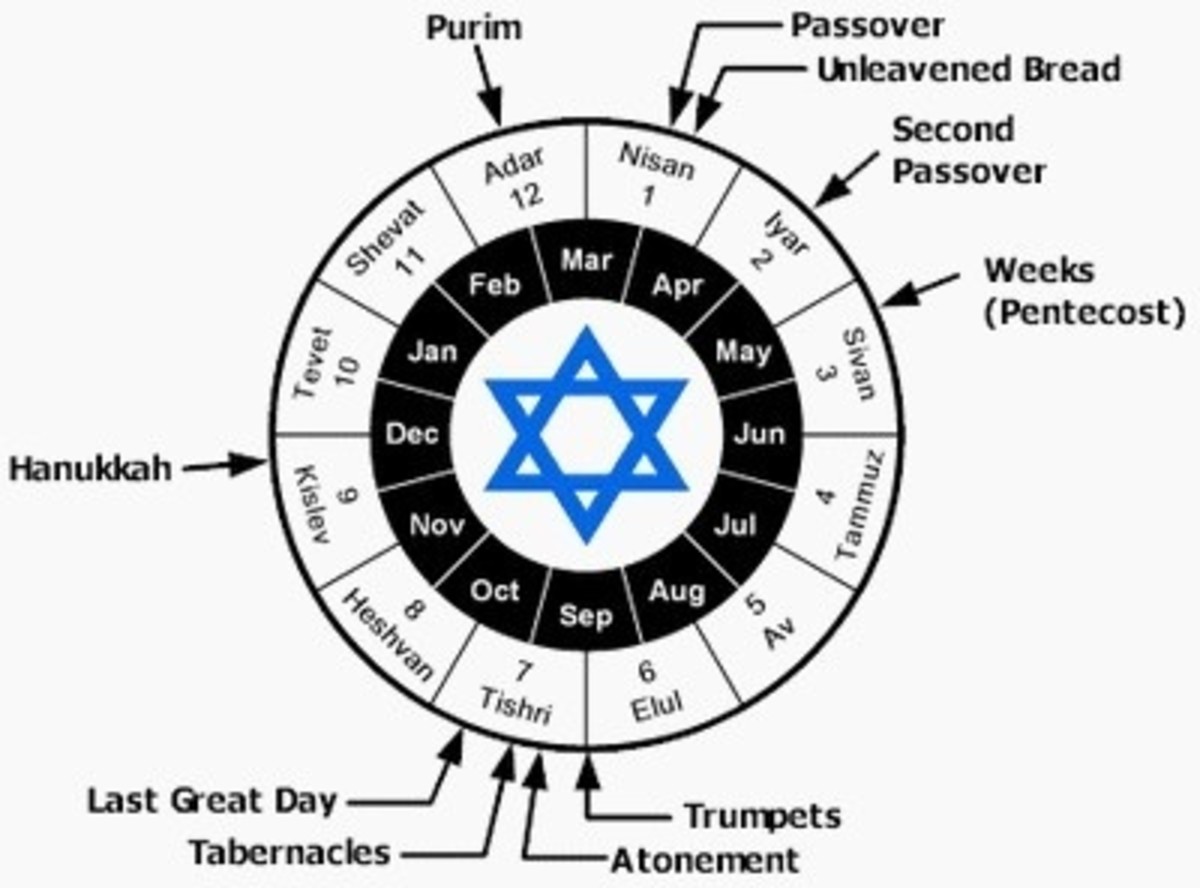
Jewish Holiday Calendar hubpages
15 rows this page shows a chart of the hebrew calendar months with their gregorian calendar equivalents. In comparison with the timing of the astronomical seasons, it is off by 1 day every 216 years. In the jewish calendar, since the lunar cycle is about 29.5 days, all months are either 29 days (known as “missing” months) or 30 days.

hebrew sabbatical calendar Google Search Hebrew months, Bible timeline, Personal bible study
Years are either 12 or 13 months, corresponding to the 12.4 month solar cycle. The jewish calendar is a lunisolar calendar (it follows the moon phases and the time of the solar year) and has 12 months with 29 or 30 days each. Most months have a set. 15 rows this page shows a chart of the hebrew calendar months.
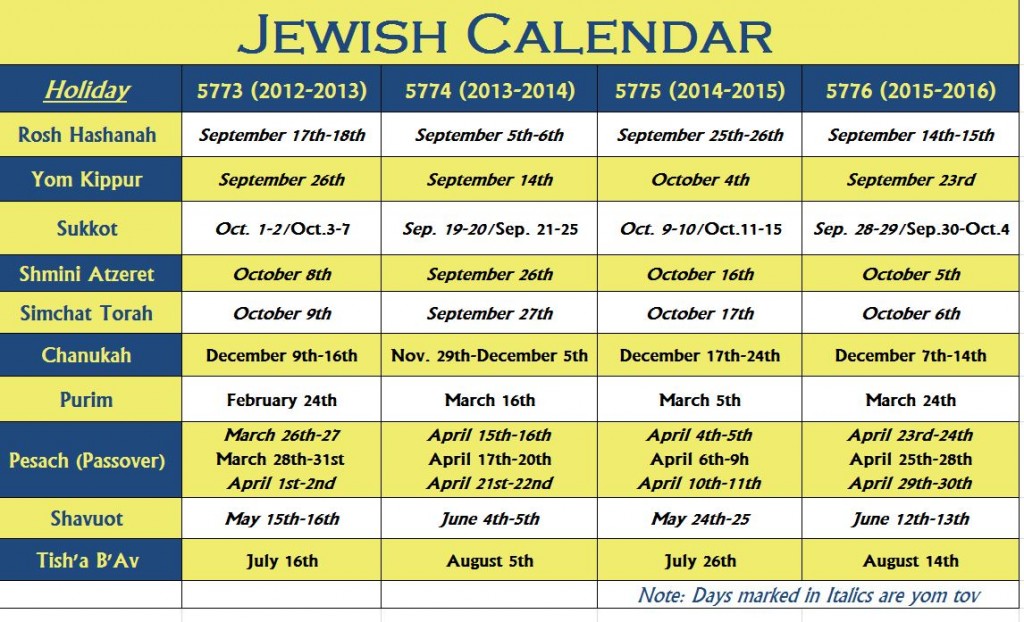
Hebrew Calendar Feb 2025 With Holidays Randal V Soto
In the jewish calendar, since the lunar cycle is about 29.5 days, all months are either 29 days (known as “missing” months) or 30 days (known as “complete” months). A standard jewish year has twelve months; 15 rows this page shows a chart of the hebrew calendar months with their gregorian calendar equivalents. This is because our months. The lunar.

New Year Hebrew Calendar 2025 Tamara J. Clarke
Years are either 12 or 13 months, corresponding to the 12.4 month solar cycle. This is because our months. A year in the hebrew calendar can be 353, 354, 355, 383, 384, or 385 days long. The jewish calendar is a lunisolar calendar (it follows the moon phases and the time of the solar year) and has 12 months with.

When Is Hanukkah On The Hebrew Calendar Vevay Julissa
Here are some examples of dates in the. The jewish calendar is a lunisolar calendar (it follows the moon phases and the time of the solar year) and has 12 months with 29 or 30 days each. A year in the hebrew calendar can be 353, 354, 355, 383, 384, or 385 days long. A standard jewish year has twelve.

МУЗЕЙ ШОЛОМАЛЕЙХЕМА Киев The Jewish Calendar
This is because our months. The lunar month on the jewish calendar. 15 rows this page shows a chart of the hebrew calendar months with their gregorian calendar equivalents. In the jewish calendar, since the lunar cycle is about 29.5 days, all months are either 29 days (known as “missing” months) or 30 days (known as “complete” months). Most months.

The Jewish Calendar with Dates for Each Month
In the jewish calendar, since the lunar cycle is about 29.5 days, all months are either 29 days (known as “missing” months) or 30 days (known as “complete” months). Here are some examples of dates in the. A year in the hebrew calendar can be 353, 354, 355, 383, 384, or 385 days long. Years are either 12 or 13.

Pentecost Hebrew Calendar Ruth Wright
A year in the hebrew calendar can be 353, 354, 355, 383, 384, or 385 days long. The lunar month on the jewish calendar. This is because our months. A standard jewish year has twelve months; The jewish calendar is a lunisolar calendar (it follows the moon phases and the time of the solar year) and has 12 months with.
The lunar month on the jewish calendar. Most months have a set. In the jewish calendar, since the lunar cycle is about 29.5 days, all months are either 29 days (known as “missing” months) or 30 days (known as “complete” months). Years are either 12 or 13 months, corresponding to the 12.4 month solar cycle. A year in the hebrew calendar can be 353, 354, 355, 383, 384, or 385 days long. A standard jewish year has twelve months; Here are some examples of dates in the. 15 rows this page shows a chart of the hebrew calendar months with their gregorian calendar equivalents. The jewish calendar is a lunisolar calendar (it follows the moon phases and the time of the solar year) and has 12 months with 29 or 30 days each. In comparison with the timing of the astronomical seasons, it is off by 1 day every 216 years. This is because our months.
The Lunar Month On The Jewish Calendar.
Years are either 12 or 13 months, corresponding to the 12.4 month solar cycle. 15 rows this page shows a chart of the hebrew calendar months with their gregorian calendar equivalents. This is because our months. Most months have a set.
A Standard Jewish Year Has Twelve Months;
In comparison with the timing of the astronomical seasons, it is off by 1 day every 216 years. A year in the hebrew calendar can be 353, 354, 355, 383, 384, or 385 days long. The jewish calendar is a lunisolar calendar (it follows the moon phases and the time of the solar year) and has 12 months with 29 or 30 days each. In the jewish calendar, since the lunar cycle is about 29.5 days, all months are either 29 days (known as “missing” months) or 30 days (known as “complete” months).